
Easy Color Changing Flower Experiment: Science for Kids


So much of teaching and parenthood is magic- and seeing life through little eyes makes the “normal” seem even more magical. That’s why I love this Color Changing Flower experiment for kids SO much. It brings science and magic together, and the wonder on my student’s faces is ALWAYS worth the time taken to complete this flower project!


Recommended Grade Level:
Materials for Color Changing Flower Experiment
- Jars
- Water
- Food Coloring
- White Carnations or Daisies


Find Coordinating Resources
Before you Begin the Color Changing Flower Experiment:
One of the most entertaining, and best ways to engage your students is parts of an taking time to allow students to predict, or make their best guess about what might happen. The first step is to put out all of materials for them to see, and pose the question “Based on what we know about flowers, and the name of the experiment… what do we think we might be doing with these materials today?” Their answers may enlighten you to their misconceptions, and scientific background knowledge. They will almost always spur some great conversations. (And they will probably make you laugh!)
Color Changing Flower Experiment: STEM Activity for Kids
There are a WEALTH of learning opportunities when it comes to STEM in general! For this Color changing flower experiment, you can choose what standard or learning skill to focus on, based on the age of your students and what you want to highlight. Once you’ve sparked the student’s curiosity, check out the rest of our science experiment collection for more ideas!
STEM Vocabulary: primary colors, secondary colors, absorption, parts of a plant, cellulose fibers, and gravity/pull.
Color Vocabulary: This color changing flower experiment uses multiple colors to show absorption and how a plant can get water to the flower and petals through the capillary system. Then the pigment in the water dyes the white petals of the flower.
Scientific process: Any STEM activity or science experiment in preschool is an opportunity to explore the steps and processes of scientific experimentation! It is the perfect time for students to create questions, form hypotheses, and reflect on the results of the color changing flower experiment for a lesson your students won’t soon forget.
Color Changing Flowers Science Experiment Hypothesis
Before starting the experiment, explain to students that a hypothesis is like making a smart guess! We think about what might happen based on information that we already know. Scientists use hypotheses to test their ideas, just like we will with our flowers!
Ask your students:
- What do you think will happen to the flowers when they sit in the colored water?
- Will different colors be absorbed at different rates?
- How long do you think it will take for the flowers to change color?
Encourage students to write or draw their predictions before starting. For younger children, you can ask them to choose between two possibilities, like “Will the flower turn red or blue faster?” This makes the experiment even more fun and interactive!
Supplies for the Color Changing Flower Experiment:
As an Amazon affiliate, I may earn from products linked in this post.
- Jars
- Water
- Food Coloring
- White Carnations or Daisies

Step-by-Step Instructions for the Color Changing Flowers
Step One:
Pour food coloring into each jar (clear jars work best so kids can easily see the colors). The more food coloring you use, the deeper the final color will be.

Step Two:
Add a similar amount of water into each jar or cup and stir in the food coloring. Then add your white carnation or daisy into the cups.
Teacher Tip: Cut the flower stem at an angle to help it absorb water more easily. Make sure the flowers are tall enough to be visible but not so long that they don’t reach deep into the colored water.

Step Three:
Sit and watch as the now colored water comes up into the white of your carnations or daisies!

This color changing flower experiment is a great one to photograph before and after images of the daisies to show how differently they look with just the addition of color to the water!
Color Changing Flowers Science Experiment Explanation
This experiment demonstrates a scientific process called capillary action. Plants absorb water through tiny tubes in their stems, called xylem, which transport water from the roots (or in this case, the cut stems) to the petals. As the plant drinks up the colored water, the pigment travels with it, changing the color of the white petals!
Key Concepts:
- Absorption: The flowers take in water through their stems.
- Capillary Action: Water moves upward through the plant’s xylem tubes.
- Color Change: The dye in the water is carried with the absorbed water, tinting the petals.
Ways to Adapt The Color Changing Flower Experiment
- Explore Color– The color changing flower experiment is a great time to practice identifying and categorizing colors.
- Adding in Math: This flower graphing activity ties in flowers, math, and color identification! What more could you ask for to extend this activity?!
Using This Experiment for a Science Project
If you’re looking for a simple but effective science fair project, this color changing flower experiment is a great choice! Here’s how to turn it into a full project:
- Ask a Question: Start with a testable question, such as: “How does the concentration of food coloring affect how quickly the flowers change color?” You could also test whether different types of flowers absorb color at different rates.
- Form a Hypothesis: Have students make an educated guess. For example, they might predict that “Stronger concentrations of dye will result in a quicker or more intense color change.”
- Conduct the Experiment: Set up multiple jars with varying amounts of food coloring (light, medium, and dark concentrations). Use identical white flowers in each jar and observe how long it takes for the color to appear in the petals.
- Record Data: Take notes and photographs at regular intervals (every 30 minutes, 1 hour, 6 hours, and 24 hours). Keep track of any differences in how the colors spread through the petals. Use a chart to log observations.
- Draw Conclusions: Compare your results to your hypothesis. Did the flowers in the more concentrated dye change color faster? Were there any unexpected results? What might have influenced the experiment, such as room temperature or flower type?
- Present Findings: Create a science fair display that includes:
- A visual timeline of the flower color change
- A bar graph showing how long each flower took to change color
- An explanation of capillary action and how it enables flowers to “drink” water
- A summary of the experiment, including the hypothesis, observations, and conclusions
- Extend the Experiment: Encourage further investigation by testing other variables, such as:
- Do flowers absorb warm-colored dyes (red, yellow) faster than cool colors (blue, green)?
- What happens if you split a stem and place each half in a different color?
- Does cutting the stem at different angles affect how quickly the water is absorbed?
This color changing flower experiment not only teaches kids about plant biology and capillary action, but also strengthens scientific inquiry skills like forming hypotheses, making observations, and analyzing results. It’s a great project that combines hands-on learning with real scientific principles!
Learn More About How Water and Color Move
More Ways to Explore Using Flowers in the Classroom:
- May Flowers I Spy Activity for Preschoolers
- Easy Flower Soup Spring Sensory Bin For Kids
- Spring Flower Salt Painting for Kids
Frequently Asked Questions
These are frequently asked questions about the color changing flowers science experiment.
Do I have to use gel food coloring?
No, you don’t have to use gel food coloring. While gel food coloring tends to create more vibrant colors due to its concentration, liquid food coloring works just as well for this experiment. If using liquid food coloring, you may need to add a few extra drops to achieve a similar depth of color. The key factor is making sure there is enough dye in the water for the flowers to absorb and show a noticeable color change.
Can I use another flowers besides carnations?
Yes! While carnations are often used because of their sturdy stems and high water absorption, you can use other white flowers such as daisies, white roses, or even chrysanthemums. The experiment works best with flowers that have visible veins and a strong ability to transport water. Keep in mind that some flowers may take longer to change color, depending on their structure and how easily they absorb water.
Can I use paint instead of food coloring?
No, paint will not work the same way as food coloring in this experiment. Paint is made of pigments and binders that do not dissolve in water the same way food coloring does. Since flowers absorb water through their stems, they need a water-soluble dye that can travel up the plant’s xylem. If you try to use paint, it will likely just settle at the bottom of the jar instead of being absorbed into the flower petals. For best results, always use liquid or gel food coloring.
How long will it take to see results?
The first signs of color change can start appearing within a few hours, depending on how fresh the flowers are and how much dye is in the water. However, for the most noticeable and dramatic results, you should allow at least 24 hours. The longer the flowers stay in the colored water, the deeper and more vibrant the colors will become. Taking pictures at different time intervals can help track the progress of the color change!
If you’re looking for a fun, engaging STEM flower science project that feels like MAGIC—this Color Changing Flower Experiment is the perfect choice! Try it with your students and share what color you experimented with!
Do you love this activity? Pin it for later!

Spring Printables to Try:
More Activities You’ll Love:


More STEM Ideas:

35+ Spring Math and Literacy Activities


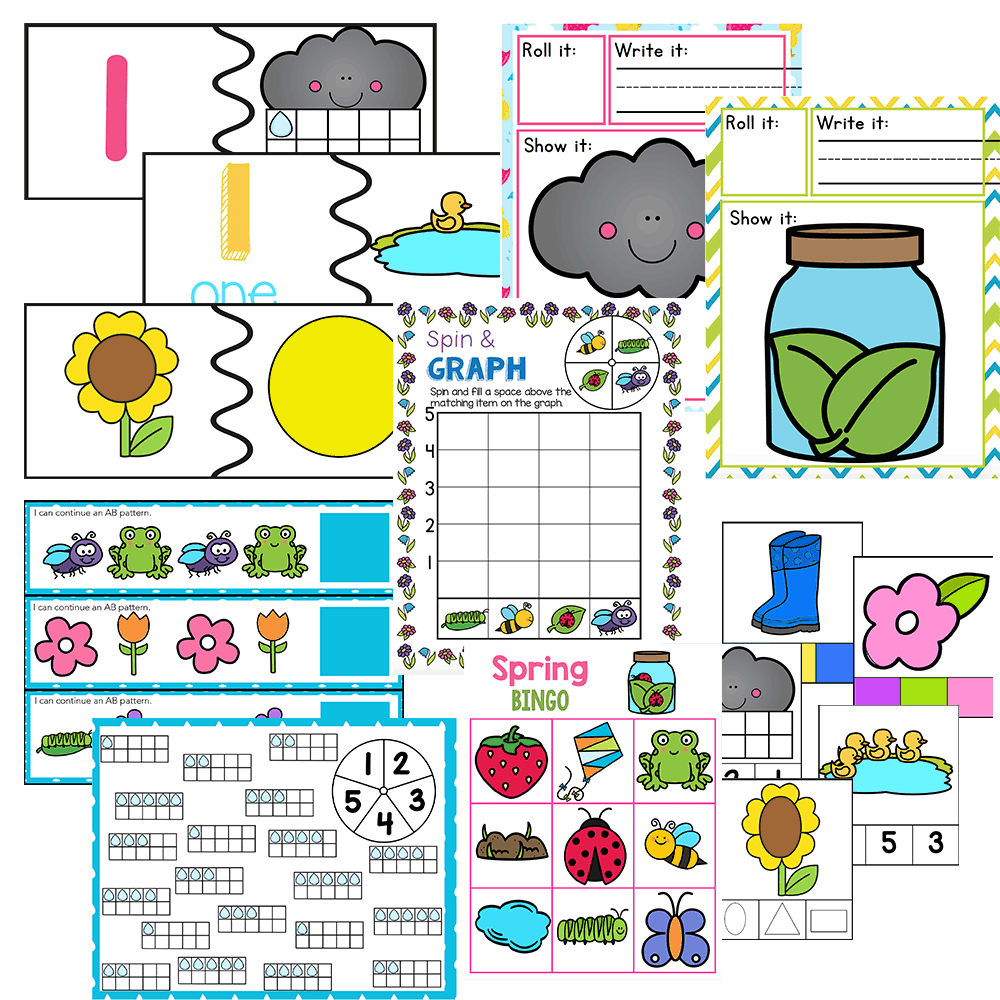
Included in the Spring Math and Literacy Activities:
- 2 Sets of Spring Number Mats (empty ten-frame, heart filled ten-frame)
- Strawberry Beginning Sound Match Up
- 4 Sets of Spring Clip Cards (color, ten-frame, array, shape)
- Spring Flower Color Sort
- Class Set of Spring BINGO
- 2 Graphing Dice Games (Matching pictures and Numbers 1-6)
- 2 Spinner Graphing Games
- Spring Theme Line Tracing Cards & Picture Tracing Cards
- Line-Up Puzzles for Counting to 5 & 10
- 4 Matching Games (picture, number, alphabet, rhyme)
- Strawberry Missing Number Cards
- 3 Levels of AB Patterns
- Spring Shape Play Dough Mats
- 2 Sets of Counting to 10 Puzzles (array, ten-frame)
- Spring Shape Puzzles
- 2 Roll and Count Mats
- 2 Sets of Spring Sorting Activities (shapes and numbers 1-10)
- 5 Spin & Cover Games (1-5, 6-10, shape, picture)
- Raindrop Ten-Frame Cards
- Spring Bugs Tic-Tac-Toe
- 4 Sets of Tracing Cards (uppercase, lowercase, number, shape)
- Visual Discernment Clip Cards (What does not belong?)
- Trace, Write & Draw the Room
Search All Activities
Looking for more? Find exactly what you need here:


