
Easy Germinating Seeds in a Bag Experiment + Free Printable


There’s something incredibly exciting about seeing a tiny seed transform into a sprouting plant, especially for little ones. If you’re looking for a hands-on, mess-free science experiment for preschoolers, look no further than the germinating seeds in a bag activity!
Not only does this simple science experiment offer a fantastic way to introduce young learners to the world of plants and nature, but it’s also super easy and requires very few materials. Whether you’re homeschooling or just looking for an afternoon activity, this simple experiment is sure to spark curiosity and get your kids excited about science. Let’s get those seeds growing! 🌿👩🔬

Recommended Grade Level:
Materials for Germinating Seeds in a Bag:
- Plastic Zip Top Bag
- Bean Seeds
- Paper Towel
- Tape


Why Germinating Seeds in a Bag is Amazing for Preschoolers
When we ask little ones to observe and identify seed growth, we’re not just talking about plants—we’re teaching them about life cycles and basic needs too! 🌱🌞 Here are some great questions to get the conversation started:
- What does our seed need to grow?
- What do you think would happen if we put the bag in a room with no light?
- How are our bodies similar to the seeds?
- What do the roots of the plant do?
- How long does it take for beans to germinate?
- How fast or slow did your beans grow?
The germinating seeds in a bag experiment is not just about watching things grow. It’s about exploring the wonder of nature and asking big questions! You can teach so much more than just growth—kids can learn about observing similarities and differences, predicting outcomes, identifying the uses of plants, and even documenting their findings through drawing or writing. 🌻✏️
More Plant Life Cycle Activities for Kids:
- Free Printable Plant Life Cycle Diagrams
- Sunflower Life Cycle Card Game
- Germinating Seeds in a DIY Greenhouse
- Plant Life Cycle Base Ten Manipulatives
Looking for a different way to germinate your seeds?
Try our EASY germinating seeds in a DIY greenhouse activity!

Why the Germinating Seeds in a Bag Science Experiments is Great for Little Learners
Let’s be real—kids love getting their hands into anything messy, gooey, or “magical,” and this activity is no exception! But beyond the fun, there are SO many learning benefits to conducting science experiments with your kiddos. The germinating seeds in a bag science experiment is just the beginning!
Observation Skills: Kids will become more observant about the world around them as they notice changes in their seeds. Don’t be surprised when your little one starts asking, “Why did the bean open up like that?!” 🍃
Problem-Solving: Experiments often don’t go perfectly the first time, and that’s okay! If the seed doesn’t sprout right away, it gives kids the opportunity to problem-solve. “Hmm, maybe I didn’t add enough water? Let’s try again!”
Vocabulary Boost: As your kiddos track the changes in the seeds, they’ll build vocabulary around colors, sizes, shapes, textures, and more. Ask them to describe how the bean looks as it germinates—trust me, they’ll come up with some creative words! 🗣️
Understanding Life Cycles: From dry seed to sprouting plant, kids will get an up-close look at the plant life cycle. This hands-on germinating seeds in a bag science experiment helps them understand where some of our food comes from—like those delicious green beans! 🫘
Printable Life Cycle Activities for Kids
Vocabulary Terms to Introduce During the Germinating Seeds in a Bag Experiment 🌱
As your little learners observe the germinating seeds in a bag science experiment, it’s a great opportunity to expand their vocabulary and help them describe what they see! Here’s a list of vocabulary terms to introduce and explore with your kids during the experiment:
- Seed – The tiny beginning of a plant that contains everything it needs to start growing.
- Germinate – The process by which a seed starts to grow and develop into a plant.
- Root – The part of the plant that grows underground and anchors it in place while absorbing water and nutrients.
- Stem – The central part of the plant that grows upwards, supporting the leaves and flowers.
- Leaf – The green, flat part of the plant where photosynthesis happens.
- Sprout – The first sign of growth in the seed, typically a small stem that emerges from the seed.
- Chlorophyll – The green pigment in plants that helps them absorb light for photosynthesis.
- Cotyledon – The first leaves that appear on a plant after the seed starts to germinate. These are sometimes called “seed leaves.”
- Water – One of the basic needs for plants to grow, absorbed by the roots.
- Sunlight – Another essential need for plants, which helps them grow by providing energy through photosynthesis.
- Soil – The ground or material in which plants grow, providing nutrients and support.
- Sprout – The very first signs of life emerging from the seed.
- Growth – The process of a seed or plant getting bigger over time.
- Cycle – The repeating pattern or stages of life a plant goes through, from seed to full-grown plant.
- Pollination – The process by which plants reproduce (though you can save this for later when you talk about flowers!). 🌸
- Seedling – A young plant that has just begun to grow from a seed.
- Observation – The act of watching something carefully and noticing details about it.
- Predict – To make a guess about what will happen next based on what you observe.
- Texture – The feel or surface quality of something—ask your kiddos to describe the texture of the sprouting bean!
By using these terms, kids can start to better describe the changes they’re observing and connect the vocabulary to the hands-on experience of growing their own plants. 🌾
![text says [stem activities 100+ easy ideas! see them all] with a black button on a green horizontal banner](https://lifeovercs.com/wp-content/uploads/2024/03/stem-activities-banner.webp "Easy Germinating Seeds in a Bag Experiment + Free Printable 8")
How to Germinate Seeds in a Bag (Without the Mess!) 🌱
Ready to get started? Here’s how you can germinate seeds in a bag with your kiddos:
Supplies You’ll Need
As an Amazon affiliate I may earn from links in this post
You won’t need a fancy lab or a trip to the store for this one—just grab these simple kitchen staples:
✅ Bean Seeds– You can try other seeds, but we find bean seeds are the perfect size
✅ Sandwich Bag
✅ Paper Towel
✅ Water
✅ Tape


Step 1
Prep the Seeds: Soak your bean seeds overnight in water. This little “wake-up call” helps them germinate faster (because let’s be real, preschoolers don’t have time for slow-growing seeds 😜).
Step 2
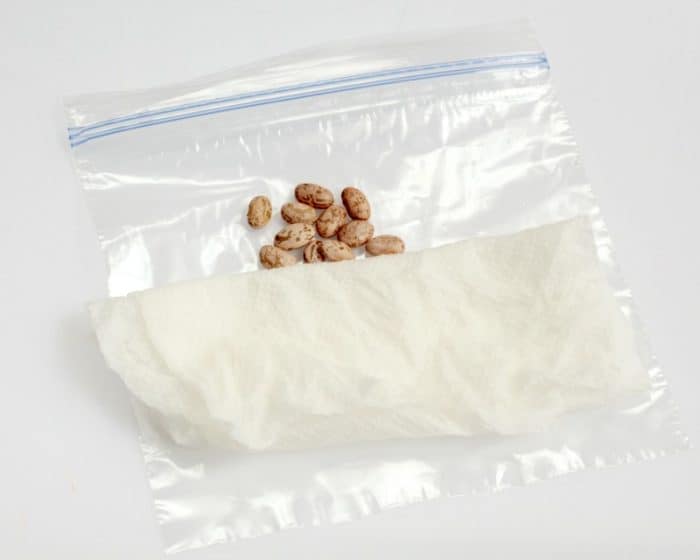
Set Up the Bag: Drain the seeds and dampen a paper towel. Fold it into the bag, then carefully press the seeds against the paper towel on one side of the bag.
Step 3
Seal and Hang: Seal the bag tightly and hang it on a window using tape (make sure the kids can easily see the seeds!).

Step 4
Wait and Watch: After about 24 hours, you should see the seeds begin to sprout. In 3-7 days, the roots will grow, and soon the leaves will start emerging! 🌱✨
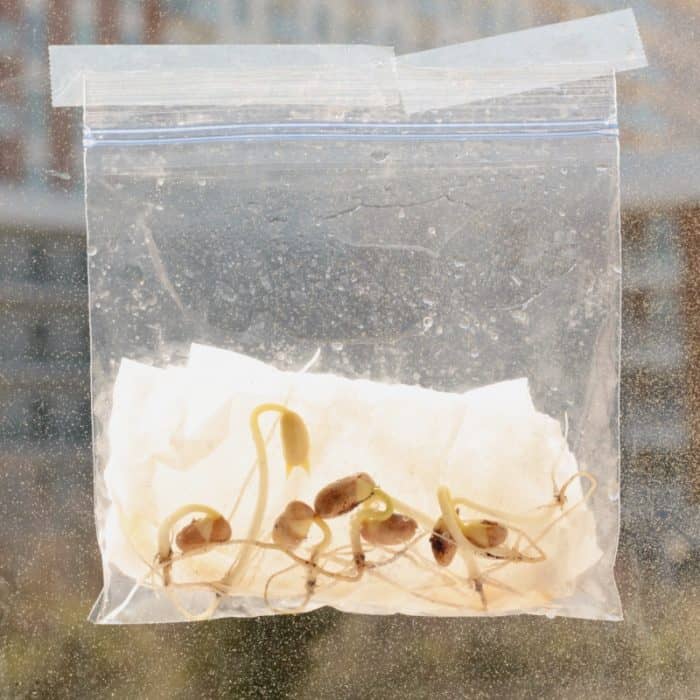
Step 5 Transfer to Soil: Once your seedlings have sprouted and the leaves appear, it’s time to move them to soil. Consider planting them in a fun “rainboot garden” or another creative container. 🌻
Fun Extensions for the Seed in a Bag Activity
Want to keep the fun and learning going? Here are some awesome extensions to try with your kiddos!
- Sequencing Cards: Take photos of your child’s bean at each growth stage. Have them arrange the pictures in the correct order to practice sequencing.
- Create a Book: Use the photos to create a storybook about your seed’s growth journey! Will your book be a fiction or nonfiction story? 📚
- Name Activity: Use extra beans to make a name activity. Have your child glue beans to each letter of their name—an awesome mix of learning about plants and letters! ✂️
- Sensory Bin Fun: Add various beans and seeds to a sensory bin with shovels, plastic pots, and pretend flowers for endless sensory exploration! 🌼
- Counting Skills: Work on counting with sunflower-themed counting mats. 🌻
More Seed and Plant Activities for Kids
- 3 Preschool Activities Using Seeds
- Garden Sensory Bin for Preschoolers
- Sunflower Seed Counting Cards
- Watermelon Seed Number Cards
Frequently Asked Questions
Here are some of the FAQs (frequently asked questions) about germinating seeds in a bag.
How long does it take for seeds to germinate in a bag?
Seeds typically start to sprout in about 24 hours, but full germination can take anywhere from 3 days to a week. After that, you’ll see the leaves emerge in just a few more days! ⏳
Do I need to soak the seeds before putting them in the bag?
While soaking isn’t absolutely necessary, it helps the seeds germinate faster. Plus, it’s a fun way to get kids involved early in the process! 🧑🔬
Can I use other seeds besides beans for the germinating seeds in a bag experiment?
Absolutely! You can try using other seeds like peas, sunflower seeds, or even pumpkin seeds. Each type of seed will have a different germination rate and process, so feel free to experiment and compare! 🌻
What happens if the seeds don’t sprout?
If your seeds don’t sprout, don’t stress. It could be due to too much or too little water, or maybe the bag wasn’t in the right light. You can always try again by adjusting the conditions, like adding more moisture or moving the bag to a sunnier spot. 🌞
Can I do this experiment with kids of all ages?
Yes! Germinating seeds in a bag is a fantastic activity for kids of all ages. For younger preschoolers, keep it simple with observation, while older kids can dive deeper into tracking growth, making predictions, and even drawing their findings.

join the newsletter & Get your free activity
Get Your Free Printable Activity Here!
Already a subscriber? No worries. Just enter your email here to have the activity sent directly to your inbox.
More Activities You’ll Love:


Search All Activities
Looking for more? Find exactly what you need here:


Where can you buy pinto beans for this experiment? Can I just by some at the grocery store like a bag of Goya beans?
Yes, pinto beans are sold at most grocery stores.
Once I put it in soil how much water should I put? And how many times?
I would suggest Googling how to transplant beans to the garden since I am very much not a gardening expert. 🙂
What about apple seeds? Would that work?
I don’t think that apple seeds would work the same, but you can always test it out. Or do two kinds of seeds and compare the results! Let us know how it goes!
Hi! I’m wondering what type of soil to put them in after they sprout? We did this experiment and they’re sprouting super quick! & should I continue to leave them in the window? 🙂
I honestly have never tried to plant them after this experiment. You could try putting them in a pot and see what happens!
Yes, pinto beans. Kidney bean did not sprout at all, lima bean maybe will sprout, but pinto bean ready to plant (I think).
Doing this experiment during remote learning with my 4th grade students. Some are reporting ‘smelly beans’. Is this normal? Honestly, sometimes life is smelly!
I’m imagining that they are opening their ziploc bag…lol! We have had our newest attempt at this experiment hanging from our dishwasher for a month and I can’t smell anything, but the original seeds look mushy in the bag, so they probably would smell if we opened the bag.
Do you need to keep paper towel damp all days? What if it dries out ?
The towel should stay damp inside your bag. We’ve been doing it again and have had the towel in the bag for 7 days and I can visible see water droplets from across the room. 🙂
Just curious, because I’m sure my child will want to keep his beans alive, does anyone know how to properly transfer these to soil after?
In this activity we have only grown the beans in the bag and thrown them away afterward. You could try to separate them and continue to grow them in small pots. In which case, you would want to bury the bean and roots and let the sprout stay above the dirt. Let us know how it goes!
What about pepper seeds? We put those in a bag with a wet paper towel seven days ago with no luck.
I can only confirm what we tried. 🙂
I have had pepper seeds grow wonderfully in kindergarten but in soil.
My son’s class used mason jars instead of baggies, but his pepper seeds have successfully sprouted. It probably took close to a week before we saw activity. We are hoping to transfer them to soil and see if they survive Mommy’s black thumb. 😉
Very cool!
The peppers may take longer to grow. We planted some strawberry seeds on Earth Day and it just started to grow.
Also, I only put 3 or 4 dried beans in the bag. (Too many make it complicated to follow each root, etc.) Most pinto beans will germinate, and you do NOT need to soak them over night! They will germinate in 2 to 3 days. Be sure to warn your children not to press or squish the soft beans (seeds), because they will become very fragile as they start to germinate and sprout. This is one of my all-time favorite activities! We all get super excited to see the “magic” of life!!
Dried pinto beans work GREAT! That’s what I use for my Kindergarten class every year!!
can you use pinto beans?
I have not tried it, but any fresh beans should work. I cannot vouch for the quality of the experiment with dried beans.
dried beans will work thats what im yousing
Dried beans work just the same , they just take longer to sprout ! =)