
Easy Frog Life Cycle & Fine Motor Craft
Yaaay for spring crafts that sneak in fine motor skills and science all at the same time!! If your kids are anything like mine, they LOVE anything with glue… googly eyes… and pom poms. So when I needed a fun way to work on sequencing the life cycle of a frog (and didn’t want to print another boring worksheet), we grabbed our craft supplies and made these adorable little frog and tadpole friends!
Here’s a peek at one of our favorite spring crafts ever—the Fine Motor Frog Life Cycle Craft! 🐸

Recommended Grade Level:
Life Cycle of a Frog Craft Supplies:
- Blue Paper
- Green Paper
- Scissors
- Glue
- White Pom Poms
- Green Pom Poms
- Googly Eyes


Hands-On Learning Meets Frog-tastic Fun
We all know how much kids love animals… and slime… and anything remotely yucky. Frogs are the perfect science topic for spring—especially when you throw in some fun facts like, “Did you know frogs absorb water through their skin instead of drinking it??” Cue the wide eyes and gasps! 😂
But instead of just reading a book or watching a video, we made the frog life cycle come alive through crafting—literally. This simple craft is packed with hands-on goodness and is super easy to prep with materials you probably already have.
What You’ll Need:
- Green and blue construction paper
- Scissors ✂️
- School glue
- Green and white pom poms
- Googly eyes (of course!)
- A kiddo ready to squeeze way too much glue (it’s fine… it dries clear 😅)
Step-by-Step Directions:
This craft breaks the frog life cycle down into three adorable stages your kiddos can create and explore:
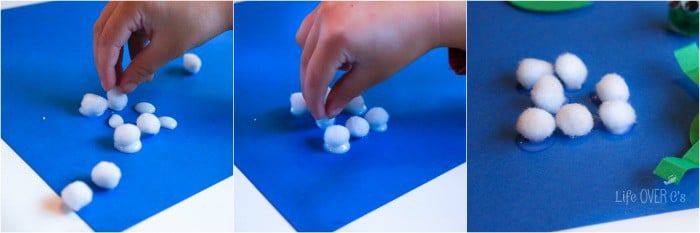
1. Frog Eggs
- Place little blobs of glue on a sheet of blue paper (to mimic pond water).
- Add white pom poms on top of each glue spot.
- Let dry and admire the squishy cuteness!
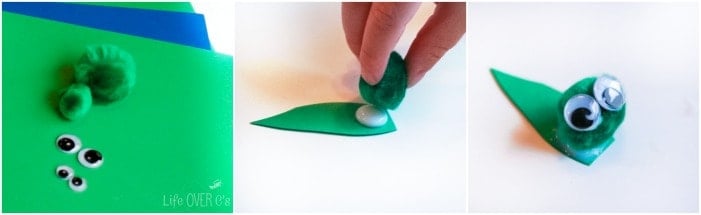
2. Tadpole
- Cut another green leaf shape.
- Add a medium-sized green pom pom for the body.
- Attach a small tail with green paper.
- Finish it off with googly eyes to give it some personality!
3. Frog
- Cut a green leaf shape from construction paper.
- Glue a large green pom pom near the wide end.
- Add two googly eyes to make your frog come to life!
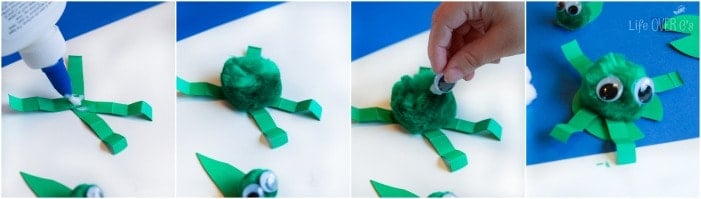
BONUS FINE MOTOR TIP: For the frog’s legs, fold strips of green paper accordion-style and glue four “legs” underneath the big pom pom body. Folding those legs is amazing for building finger strength!
Why This Craft is More Than Just Cute
Sure, it looks adorable. And yes, the kids will beg to make more googly-eyed frogs… but this activity is packed with academic benefits. Here’s how it checks all the boxes:
Fine Motor Practice
Crafts like this are secretly building those tiny hand muscles kids need for writing, self-care tasks (like buttoning and zipping), and daily independence.
Cutting green paper strips, folding them accordion-style for the frog’s legs, squeezing glue, and carefully placing pom poms or googly eyes all require control and coordination. These small movements are essential for developing pencil grip and strength!
Bonus: kids don’t even notice they’re working because they’re too busy having fun.
Sequencing Skills
Understanding the life cycle of a frog gives children practice in ordering event… a foundational skill for both science and literacy.
As they glue together the stages (eggs → tadpole → frog), they’re actively retelling the process with their hands, which cements the concept more deeply than a worksheet ever could.
You can talk through it as they build it: “What comes first? What happens next?”—perfect for reinforcing that beginning, middle, and end structure.
Science Vocabulary
Introducing words like metamorphosis, gills, tail, habitat, and amphibian during a craft makes the vocabulary stick so much better! When kids can connect a word to a concrete item they’ve touched and created, they’re more likely to remember it.
This makes your science time more interactive, sensory-rich, and brain-friendly for all types of learners—especially visual and kinesthetic ones.
Sensory-Friendly and Adaptable
Not every child is ready for messy play, and that’s okay! This activity can be tailored to different sensory needs by simply swapping materials (use felt circles instead of pom poms, or glue dots instead of liquid glue).
For kids who love sensory input, gluing pom poms or even squishing glue with their fingers provides a little extra tactile experience.
It’s a super inclusive activity that you can tweak without taking away from the learning.
PLUS: It’s cross-curricular!
You’re covering science (life cycles), literacy (sequencing + vocabulary), and fine motor development all in one go. This means teachers can feel confident that craft time isn’t taking away from academics—it’s reinforcing them in a meaningful and developmentally appropriate way.
My daughter Shiloh especially loves these types of crafts because they don’t feel like “work.” She’s learning complex ideas like metamorphosis, but she’s doing it while giggling at her frog’s silly eyes and pretending to hop around the table. That joy? It’s where real learning happens. 💗
Easy Ways to Extend the Learning
Don’t stop the fun after the glue dries! These simple extensions will keep the frog life cycle fresh in your kiddos’ minds—and stretch the learning even further:
Read Alouds That Reinforce the Theme
Books like Tale of a Tadpole by Karen Wallace or How Does a Frog Grow? are perfect companions. They offer real-life facts with kid-friendly illustrations, so you can reinforce the science through storytime.
(Tip: Pause to let kids connect what they see in the book to their own craft!)

Create a Frog Life Cycle Sensory Bin
Create a frog pond sensory bin, add some blue rice (for pond water), mini frog toys, cupcake liner lily pads. Let kids scoop, pour, and sort the different stages! Great for hands-on exploration and reviewing science vocabulary while also working on tactile and motor skills.
Sing Circle Time Songs
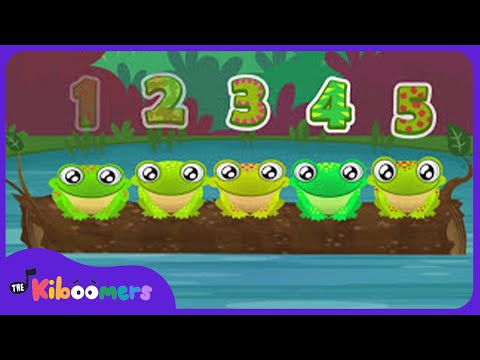
“Five Green and Speckled Frogs” is a preschool classic for a reason—it’s fun, it’s silly, and it helps with counting and subtraction too! Add finger puppets or use your frog crafts as visual props during the song for even more engagement.
Retelling and Dramatic Play
Once the craft is finished, kids can use their frogs and tadpoles to act out the life cycle. You might hear your students playing “pond” during center time or using the vocab in their pretend play—which means the learning has really stuck. You can even create a felt board or pocket chart version to go along with your craft pieces for classroom retelling! Grab our Frog Pond Pretend Play Set here!
More Frog Activities You’ll Love:


Hands-on Crafts for Kids:
- Easy Cupcake Liner Flower Craft for Kids
- Free Printable Christmas Paper Dolls
- F is for Flower: Uppercase Letter F Craft
- DIY Sensory Balloons
![collage of photos of letter crafts text says [alphabet crafts all 26 letters get them here!]](https://lifeovercs.com/wp-content/uploads/2024/11/Alphabet-Crafts-Banner-1.webp "Easy Frog Life Cycle & Fine Motor Craft 11")
Search All Activities
Looking for more? Find exactly what you need here:


Such a cute craft.We didn’t do a craft at the end of our week for life cycles and I will now be doing this this Saturday to make up for it.
I love this craft — such a great hands-on way for little ones to learn the life cycle. THanks!
This looks like SO much fun! I can see my kids loving it. and pom poms. a plus this side
So adorable! Both the project AND her photo with the accordion paper!
Googly eyes just make everything more fun!
Absolutely!
This is really cute, Kim! Too bad you couldn’t get video. I always get wrapped up in the activity and forget!
Shiloh looks like she had a blast with this fun project! I know our kids would love it too. This is a great way for us to use some of our pom poms. Thank you!
I bet your kids would enjoy it!! We love learning with our craft supplies.
So cute – We will be building our own pond. Thank you.
Have fun!!
The frog life cycle is a great way to explain how a frog becomes a frog. We have been doing the Letter F and have read a few books dealing with frogs, this would be a good addition to the books. We have a built in pool that isn’t used as a pool anymore but it becomes a home to frogs in the spring thru to the fall when the weather turns cold. We also have a pond on the farm where we go to see the tadpoles, frogs and turtles. I think my granddaughter will enjoy doing this craft, she is turning 3 in April.
Keep up the good work sending fun and educational lessons out.
Thanks, you make learning fun.
Terri
That would be so fun to see the frogs up close!
What a fun collection of frog activities!!! Folding those frog legs would be great fine motor practice for my preschooler.