
7 Free Card Games for Counting to 5
If you’ve ever sat with a preschooler who is so close to recognizing numbers or counting objects accurately, you know the magic moment when it suddenly clicks. It usually doesn’t happen during a worksheet. It happens during play. Kids learn to count long before they can write numerals, which means they need hands-on, visual, predictable activities that build confidence one small step at a time.
That’s exactly why I love using card games for counting. They are simple to prep, easy to differentiate, and packed with opportunities to explore number recognition, counting, number formats, base ten concepts, ten-frames, arrays, expanded form, and one-to-one correspondence… all while your littles think they’re just having fun with cards.
Today I’m sharing 7 free card games for counting to five using my Numbers to 5 Card Games printable. These games work beautifully in preschool, Pre-K, kindergarten intervention, small groups, math centers, and at-home learning. Best of all, once you teach the games, kids can replay them independently again and again.

Recommended Grade Level:
Materials for the Counting to 10 Number Card Games
- Paper
- Laminating Materials
- Paper Cutter
![square image with screenshots of eight number playing cards with ten-frames, domino, tally marks, numeral, array, place value notation text says [math card games numbers 1-20 slap it card game]](https://lifeovercs.com/wp-content/uploads/2015/03/Numbers-1-20-Slap-It-Card-Game-Number-Recognition.webp "Numbers 0-20 Slap It! Card Game for Kindergarten Math Centers 2")
Why Counting Card Games Work So Well for Preschoolers
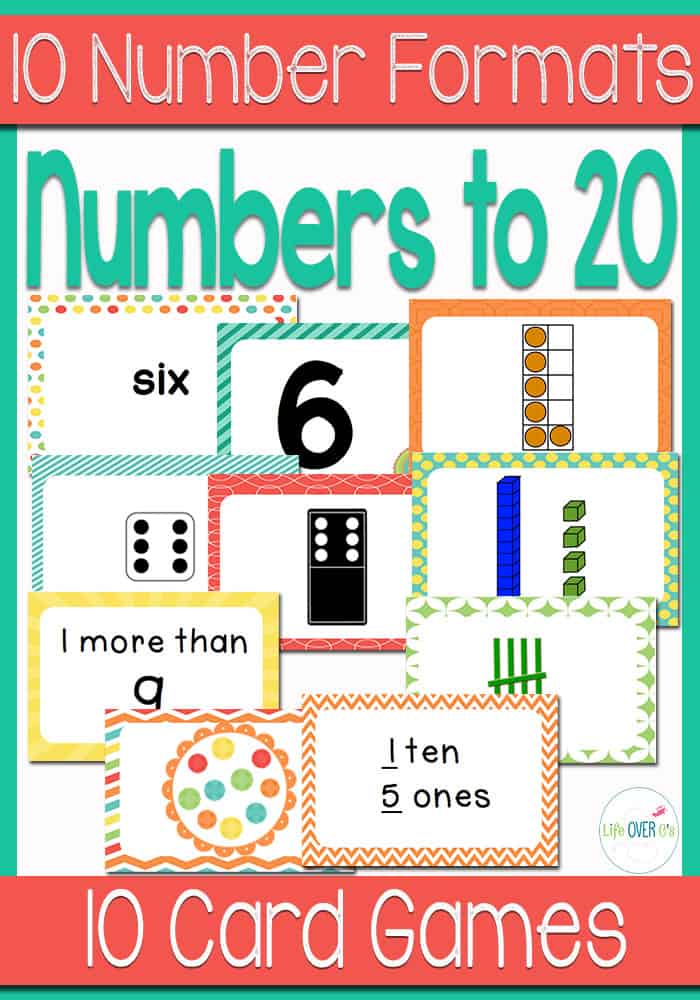
Hands-on math games help young children internalize early number concepts long before paper-and-pencil tasks feel natural. When you use a deck that includes multiple number formats, such as:
- Numerals
- Number words
- Base-ten blocks
- Dice patterns
- Ten-frame cards
- Expanded form (0 tens 3 ones)
- One-more-than cards
…your kids begin to build flexible thinking about what numbers mean, not just what they look like.
Card games strengthen:
- Number recognition
- Counting to 5 with visuals
- Comparing quantities
- Matching different number formats
- Subitizing (instantly recognizing small quantities)
- Fine motor skills as kids flip, sort, and handle cards
- Turn-taking, memory, and social skills
Preschoolers thrive when math feels like play. Card games make counting a natural, low-pressure experience where kids explore numbers from many different angles.
Materials You’ll Need
One of the best parts about these counting games is the minimal prep.
To get started, you’ll need:
- The free Numbers to 5 card set
- Cardstock or one-sided scrapbook paper for durability
- Scissors
- Optional: Laminator if these will be used often or in math centers
- A small basket or zip bag for storage
Tip from the file: Cardstock or patterned scrapbook paper prevents “seeing through” cards, which is especially helpful during games like Memory.
7 Free Card Games for Counting to Five
Below are the seven games included in your printable pack, each paired with teaching notes, skill-building tips, and differentiation ideas.
1. Slap-It! Counting Game
This fast-paced game is always a kid favorite. It’s perfect for helping little learners connect ten-frames, dice patterns, numerals, arrays, and expanded form with their spoken number names.
Quick How-To:
- Place one set of cards face down as the CENTER pile.
- Each child receives their own stack of PLAYING cards.
- Flip a CENTER card, then players take turns flipping PLAYING cards.
- When a PLAYING card matches the CENTER card’s number, kids slap it!
- First to slap collects the pile.
Skills strengthened:
- Number recognition
- Matching number formats
- Subitizing
- Reaction time and focus
Teacher Tip: Choose a number format that your learners struggle with most for the CENTER pile. It draws their attention to the exact representation they need more practice with.

More Slap It! Games to Try:
- Weather Slap It! Card Game
- 2D Shapes Slap It! Card Game
- 3D Shapes Slap It! Card Game
- Punctuation Slap It! Card Game
2. Traditional War for Counting
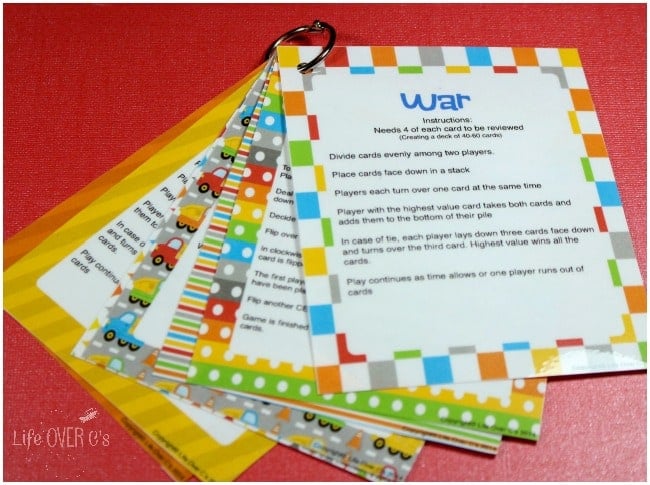
Yes, the classic game of War works beautifully for early math. And don’t worry… you’re only using numbers 0–5, so it stays developmentally appropriate.
Quick How-To:
- Divide cards evenly.
- Each player flips one card.
- Highest number wins the round.
Why it works:
Kids repeatedly compare quantities, strengthening early math vocabulary like more, less, and same.
More War! Card Games to Try:
- Addition Facts War! Card Game
- Alphabetical Order War! Card Game
- Place Value War! Card Game
- Butterfly Life Cycle Sequencing War! Card Game
3. Memory Game
Memory is perfect when you want a quieter, more focused activity.
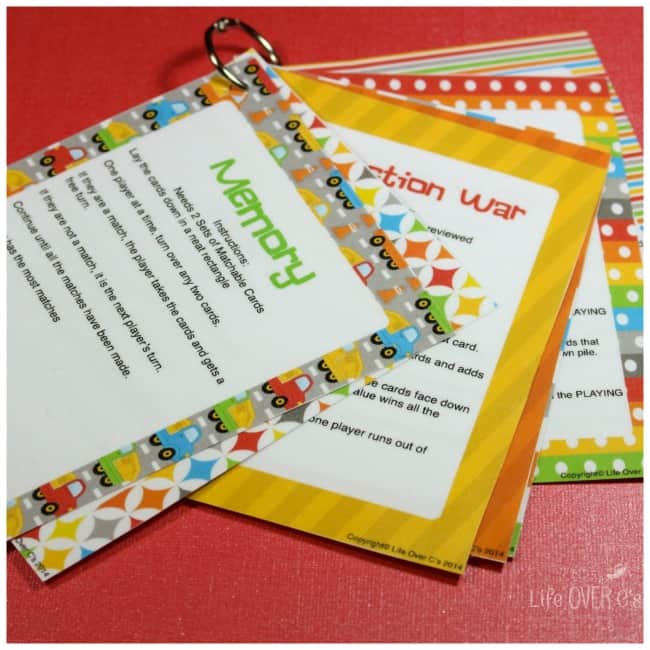
Quick How-To:
- Lay out two sets of matchable cards.
- Players turn two over at a time.
- If they match, the player keeps the pair and takes another turn.
Skills strengthened:
- Visual discrimination
- Matching number formats
- Concentration and attention to detail
Differentiation:
Start with fewer cards (such as numerals + ten-frames for 1–3) and add more formats as kids gain confidence.
4. Go Fish! Counting Edition
This game is wonderful for language development, especially for children working on math vocabulary or expressive communication.
Quick How-To:
- Deal 7 cards to each player.
- Players ask others for cards that match the number or format in their hand.
- First to make matches for all cards wins.
Why it works:
Kids verbalize what they see, compare formats, and build number recognition through conversation.
5. Addition War (Using Numbers to 5)
This is a gentle introduction to composing numbers without formal addition worksheets.
Quick How-To:
- Each player flips two cards.
- Add the cards together.
- Highest sum wins the round.
Skills strengthened:
- Counting on
- Early addition
- Combining small quantities
Note: Even in preschool, this can remain concrete. Kids might count dots, dice, cubes, or ten-frame icons to find totals.
6. Subtraction War
Just like Addition War, this game introduces basic subtraction concepts in a visual, child-friendly format.
Quick How-To:
- Each player flips two cards.
- Find the difference using visuals.
- Lowest difference wins the round.
Why it works:
Instead of abstract equations, kids compare pictures, dice patterns, and ten-frame icons to figure out how many are left.
7. Multiplication War (Yes… really!)
Okay, preschoolers aren’t multiplying yet, but early elementary students who still benefit from number-format practice love this game. It’s a great option if you want the activity to grow with your learners.
Quick How-To:
- Players flip two cards.
- Multiply.
- Highest product wins.
Perfect for:
Mixed-age groups or siblings learning together.
First and second graders who still need support connecting visual models to number facts.
Ways to Differentiate These Counting Games
Whether you’re working with preschoolers, kindergarteners, or learners who need more time with foundational math skills, these games are easy to adapt.
Start small
- Use only numerals for 1–3.
- Add dice cards or ten-frames when students are ready.
Build flexible thinking
- Mix formats: one child may match a numeral to expanded form or a ten-frame to a dice pattern.
- Use only one “challenging” format as the CENTER pile in Slap-It!
Support fine motor needs
- Use larger cards.
- Let players point instead of slap.
- Play in pairs so someone can assist with turning cards.
Support language development
- Model full sentences: “I have a three.” “Do you have a five?”
- Encourage kids to describe what they see: “My card shows 0 tens and 2 ones.”
Encourage independence
- Store each game in its own zip-top bag with printed instructions.
- Teach one game per week and add it to your math center rotation.
Educational Skills Covered
These free counting games help kids build a solid understanding of early math concepts, including:
- Counting to 5
- Number recognition
- Matching visual and symbolic number formats
- Subitizing
- Base ten understanding with 0 tens, 1–5 ones
- Ten-frame counting
- Comparing numbers
- One-more-than relationships
- Early addition and subtraction strategies
- Social skills like turn-taking and cooperation
Frequently Asked Questions
Here are some frequently asked questions about the counting card games.
Do I need to laminate the cards?
Lamination isn’t required but it will help them last longer in busy classrooms. If you skip laminating, definitely print on cardstock so kids can’t see through the cards.
Which counting game should I start with?
Most teachers begin with Memory or Slap-It! because both are simple, visual, and easy for kids to understand.
Can I use these games with older learners?
Absolutely. First graders and even some second graders benefit from seeing numbers in different formats, especially when working on fact fluency.
How do I support kids who struggle with matching?
Limit the formats at first. You might begin with only numerals and ten-frames, then gradually add dice, arrays, and expanded form as your children gain confidence.
Teaching counting doesn’t need to involve endless worksheets or flashcard drills. When preschoolers play math games, they build strong, meaningful understandings of numbers while staying engaged, giggly, and confident. These 7 free counting games give you a full toolkit for helping little learners master numbers to five in a developmentally appropriate, joyful way.
If you want even more hands-on math resources, you’ll love exploring the rest of my counting and number recognition activities on Life Over C’s.
join the newsletter & Get your free activity
Get Your Free Printable Activity Here!
Already a subscriber? No worries. Just enter your email here to have the activity sent directly to your inbox.
More Card Games You’ll Love:
Looking For More Card Game Ideas?


Need More Counting Activities?
Search All Activities
Looking for more? Find exactly what you need here:


Thank you so much for all these beautiful resources. I can just see how much fun my three year old and I will be having with them 🙂
It is so awesome that you share these with us. How cool for you to know that your hard work is being appreciated all over the world. We will be playing with these (and lots of your other resources) in New Zealand!