
Painting with Lemons: Fun Summer Process Art for Kids
![text says [summer themed process art painting with lemons click for details] vertical collage of two lemon print art activities](https://lifeovercs.com/wp-content/uploads/2024/05/Lemon-Painting-Process-Art-pin-11-667x1000.webp)


Looking for a fresh and fun way to mix art and sensory play? Painting with lemons is a perfect process art activity for kids that brings a little summer sunshine indoors! The bright yellow color, the zesty scent, and the unique circular prints make this a great hands-on way to explore texture, color mixing, and creativity—all while keeping kids engaged in a no-pressure, open-ended art experience.
Whether you’re teaching preschool, homeschooling, or just looking for a fun summer art for kids, this simple activity is sure to be a hit. Grab some lemons, roll up your sleeves, and let’s get painting!

Recommended Grade Level:
Supplies for Painting with Lemons:
- Paper Plate
- Two Lemons
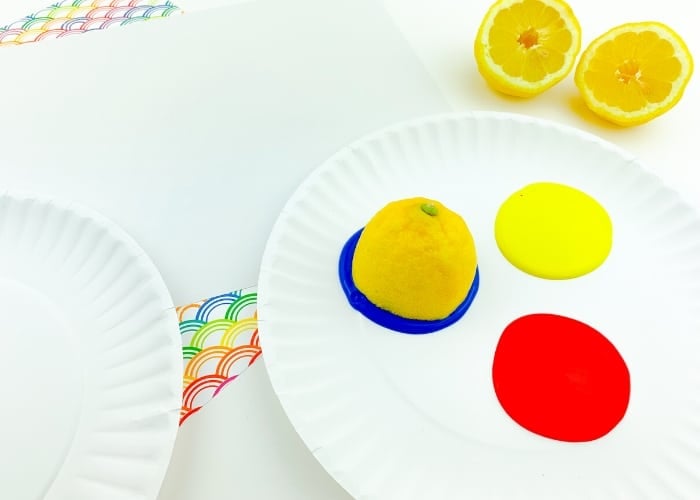
- Paint – We used red, blue, and yellow
- Paper Towels
- Paper


Why Painting with Lemons is a Must-Try!
Painting is always a hit with kids, but painting with lemons adds a whole new level of excitement! This process art activity is all about exploration, creativity, and hands-on learning, with no right or wrong way to do it. That means kids can create freely while experiencing new textures, colors, and even scents!
If you’ve never tried fruit painting before, here’s why you’ll love it:
- It’s a sensory-rich experience!
Let’s be honest—kids love to touch, squeeze, and explore anything they can get their hands on. With bumpy lemon peels, juicy pulp, and smooth, colorful paint, this activity gives them plenty of ways to engage their senses. Plus, the fresh lemon scent makes the experience even more exciting! - It builds fine motor skills.
Holding a paintbrush is great, but gripping a lemon half, dipping it in paint, and pressing it onto paper uses different hand muscles that help develop strength and coordination. These are the same muscles kids need for writing, cutting, and buttoning their shirts, so this is more than just an art project—it’s a fun way to get in some extra fine motor practice! - It encourages color exploration.
Kids love experimenting with colors, and this activity is a perfect way to let them mix and discover new shades. What happens when yellow and blue overlap? What if we stamp with red on top? Let kids make predictions, test their ideas, and get excited about the results. - It sneaks in a little science.
Lemons aren’t just fun to paint with—they’re a great introduction to simple science concepts! Talk about where lemons grow, what makes them sour, and even compare the prints of different fruits. If you want to go a step further, try squeezing some lemon juice onto baking soda for a fizzy reaction before or after painting!
And the best part? It’s easy, mess-friendly, and totally open-ended—so whether you’re working with a group of preschoolers or just one eager little artist, this activity is guaranteed to bring lots of smiles.
Ready to give it a try? Grab some lemons, some paint, and let’s get started!
Materials Needed For Painting with Lemons
As an Amazon Associate, I earn from qualifying purchases
Easy Setup and Materials
Ready to get started? It’s as easy as 1-2-3! Here’s what you need for painting with lemons:
- Two Lemons
- Paper Towels
- Paper Plate
- Paint – We used yellow, red, and blue
- Paper

Step-by-Step Instructions for Painting with Lemons
This isn’t your typical painting project—we’re using real lemons as paintbrushes! It’s fun, a little messy (but totally worth it), and full of creative possibilities. Whether you’re doing this with a group of energetic preschoolers or just one curious little artist, the key is to let them explore without worrying about making things look “perfect.”
Step 1: Prep Your Lemons
Before we jump into the painting fun, let’s get our materials ready. The lemons are the stars of this activity, so take a moment to check them out before they hit the paint!
If the lemons are extra juicy, press them onto a paper towel for a second to soak up the excess liquid. This helps keep the paint from getting too watery on the paper. (But don’t worry—some juice mixing in with the paint just makes it more fun!)
Slice the lemons in half so you end up with four pieces. These will be your “paintbrushes.” (If you have a bigger group, you might want to cut up a few extras.)
What do you notice? Ask kids to describe what they see, feel, and smell. Are the lemons bumpy? Juicy? Do they smell fresh and sour? This is a great chance to work on observation skills!
Step 2: Get the Paint Ready
Now for the colorful part! Since lemons are already bright and sunny, they’re the perfect way to explore color mixing.
- Grab a paper plate (or a few, if you want to keep colors separate). This will be your paint palette.
- Squeeze out some paint—yellow is a must, but don’t stop there! Try adding blue, red, and green to see what fun colors you can make.
- Encourage kids to mix colors right on the plate or let them experiment as they stamp. Ask them, “What do you think will happen if we stamp yellow on top of blue?” Then let them find out!
If kids want even more variety for the painting with lemons project, try adding a tiny bit of white to one of the colors—it softens the shade and gives it a fun pastel effect!

Step 3: Start Stamping!
Time to get those lemon prints on the paper! There’s no wrong way to do this—just dip, stamp, and have fun.
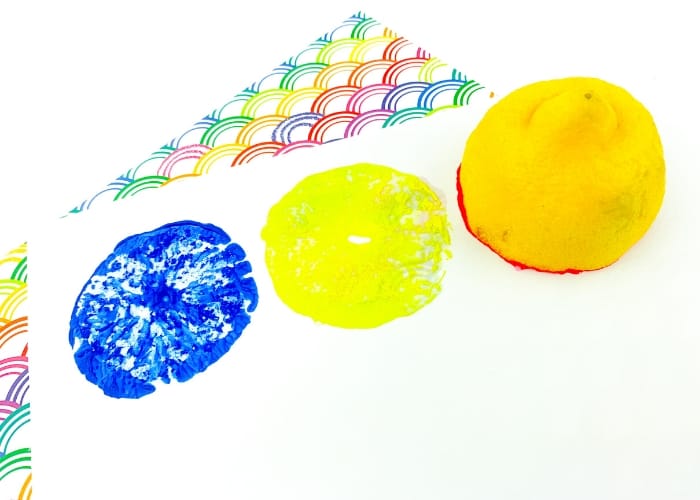
- Pick up a lemon half and dip it into yellow paint. Make sure the whole surface is covered—kids might want to press it down gently into the paint a few times.
- Stamp the lemon onto the paper and lift it up. Check out the cool circular print!
- Keep stamping with yellow, leaving some space between each print. If kids want to try a different technique, encourage them to twist the lemon slightly as they lift it to create a swirled effect.
- Now, let’s mix things up! Dip another lemon into blue paint and stamp it so it slightly overlaps a yellow print. What happens? If kids notice the colors blending into green, celebrate the discovery!
- Repeat the process with different colors, filling the paper with bright, beautiful citrus prints.
Want to experiment even more? Try these fun twists for painting with lemons:
- Rolling the lemon instead of stamping – Instead of pressing down, have kids roll the lemon across the paper like a rolling pin. The streaky effect looks awesome!
- Using the lemon peel – Try stamping with the bumpy side of the peel instead of the inside for a completely different texture.
- Cutting the lemon into different shapes – If you want more variety, try slicing the lemon into quarters or even fun shapes like triangles. How do the prints change?
Step 4: Let the Artwork Shine!
Now for the hardest part—waiting for the paint to dry!
- After you have finished painting with lemons, let the paper sit for a bit before moving it around. If your little artists are feeling impatient, place the paper near a fan or outside in the sun to speed up the drying process.
- Take a step back and admire the artwork. Ask kids what they like about their prints! Do they notice any cool color patterns? Did their stamps turn out the way they expected?
- Find a way to show off their masterpiece! Frame it (check out these great ideas for displaying children’s art), hang it on the fridge, or even turn it into a fun homemade greeting card. If you used a big piece of paper, you can even use it as wrapping paper for gifts!

Bonus Idea: Once the artwork is completely dry, grab some markers or puffy paint and let kids outline their lemon prints or add extra details. Maybe turn some of the circles into smiley faces, flowers, or even little suns!
Yay! You did it. What Now?
If desired, frame your painting and use it to decorate your home!
I don’t know about you, but no matter what my home decor is, I always have more room for art prints designed by my kids! Fruit prints make the perfect addition to any kitchen, playroom, or dining room wall!
Adapt this Art Activity for A Variety of Abilities
1. Vary the Size of the Lemons
- Smaller Lemons for Fine Motor Practice: Use smaller lemon pieces for children who need to work on their fine motor skills.
- Larger Lemons for Easier Handling: Provide larger lemon halves for easier gripping by younger children or those with limited motor skills.
2. Use Adaptive Tools
- Grip Aids: Attach handles or use tongs to hold the lemon halves, making it easier for children with motor difficulties to press the lemons into the paint and onto the paper.
- Stamping Tools: Provide pre-made stamps or sponges in various shapes for those who may struggle with handling the lemons.
3. Offer Different Paint Application Methods
- Brushes or Rollers: Allow children to apply paint to the lemons with brushes or rollers instead of dipping them directly into the paint, reducing mess and making it easier to control the amount of paint used.
More Ways to Explore Painting with Lemons
This activity is just one example of how you can use lemons to create a beautiful art print! Once your preschooler has mastered this new technique let them try lemon art some other ways!
- Experiment with colors! Let your preschooler mix colors and see what happens! This is a perfect way to introduce them to the concept of primary and secondary colors and then check out this resource for more color activities: Easy Activities for Learning Colors.
- Create a new pattern! Your little one will love experimenting and creating new patterns! Our Fruit Theme Pattern Mats are the perfect next step to explore fruit patterns.
Need more inspiration for painting with produce? Look here:
Frequently Asked Questions
These are frequently asked questions about painting with lemons.
What type of paint works best with fruit painting?
Washable, non-toxic acrylic or tempera paint works best. These paints are safe for kids and easy to clean up.
How do I keep the print from smudging?
Make sure to press the lemon halves gently and lift them straight up off the paper. Allow each print to dry before making another print nearby to avoid smudging.
How can I make tie painting with lemons into other curricular areas?
Discuss the shapes and patterns the lemons make, explore color mixing with the paint, and talk about the senses involved (sight, touch, smell). You can also incorporate counting by having children count the number of prints they make.
What’s the best kind of paper to use for fruit prints?
Use thick, sturdy paper like cardstock or construction paper to prevent it from tearing or becoming too soggy from the paint.
While the smell of citrus still lingers, you might be planning your next printing with food project. Let us know how painting with lemons turned out and what you plan to do next!

More Food Theme Activities!
Don’t stop here! Seriously, what kid doesn’t love playing with their food? So, naturally, learning with their food has to be a favorite too…
Get even more food activities below!
Try More Print-Making Painting Projects
More Lemon Theme Ideas


Here are more process art ideas for you
- Toilet Paper Roll Fireworks
- Ice Cube Painting
- Christmas Tree Fork Painting
- Flower Salt Painting
- Guide to Hydro-dipping Sand Dollars
Search All Activities
Looking for more? Find exactly what you need here:


